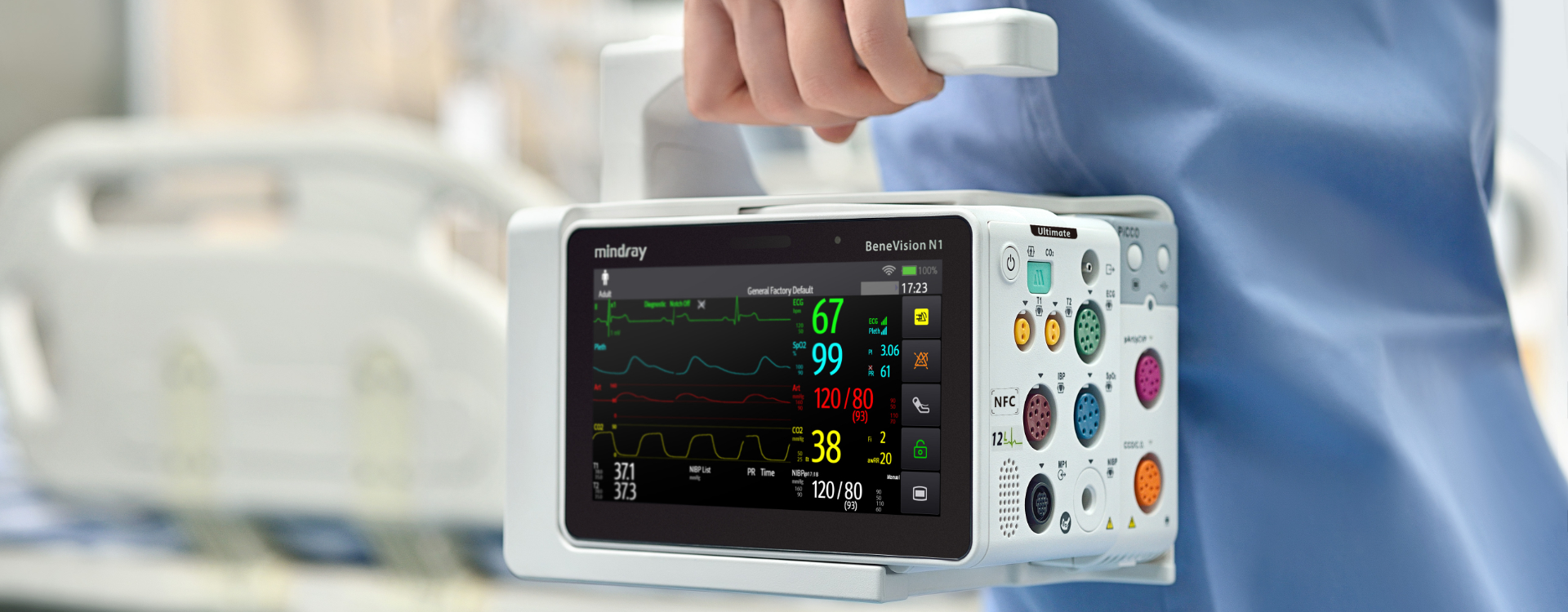

Features of the N1 Bedside Monitor The N1 Bedside Monitor is a precision-driven monitoring system that stands out with its compact design and advanced technological features. It offers a reliable solution in critical care areas such as intensive care units, operating rooms, and emergency departments.
Developed under the assurance of Upmedical, the N1 is a high-performance medical monitor designed to continuously observe and evaluate patient vital signs in clinical settings. It provides healthcare professionals with fast and accurate data, particularly during intensive care, pre-operative, and post-operative periods.
Key Features:
High-Resolution Display: The N1 monitor displays vital parameters such as heart rate, respiratory rate, oxygen saturation (SpO₂), body temperature, and non-invasive blood pressure (NIBP) in real time on a clear and spacious screen.
Compact and Portable Design: Its lightweight and ergonomic structure allows for easy use in both fixed locations and during patient transport.
Modular Architecture: The system can be customized with modular hardware options to meet various patient needs. Expansion ports support integration of additional sensors and measurement units.
Data Recording and Reporting: The N1 can store measurement data in internal memory, providing quick access to patient history. Data can also be transferred via USB or network connection.
Alarm Systems: Visual and audible alarms are triggered when critical threshold values are exceeded, maximizing patient safety.
Areas of Use:
Intensive Care Units (ICU)
Operating Rooms
Emergency Departments
Patient Wards and During Transport
Advantages:
User-friendly interface for easy operation
Accurate and reliable measurements supporting clinical decisions
Long battery life and uninterrupted monitoring
Multi-language support and optional touchscreen control.
Conclusion:
The N1 Bedside Monitor enhances treatment processes by allowing healthcare professionals to intervene quickly and efficiently, while significantly improving patient safety. Designed to meet the technological equipment needs of healthcare institutions, this device is an essential component of modern medical services.